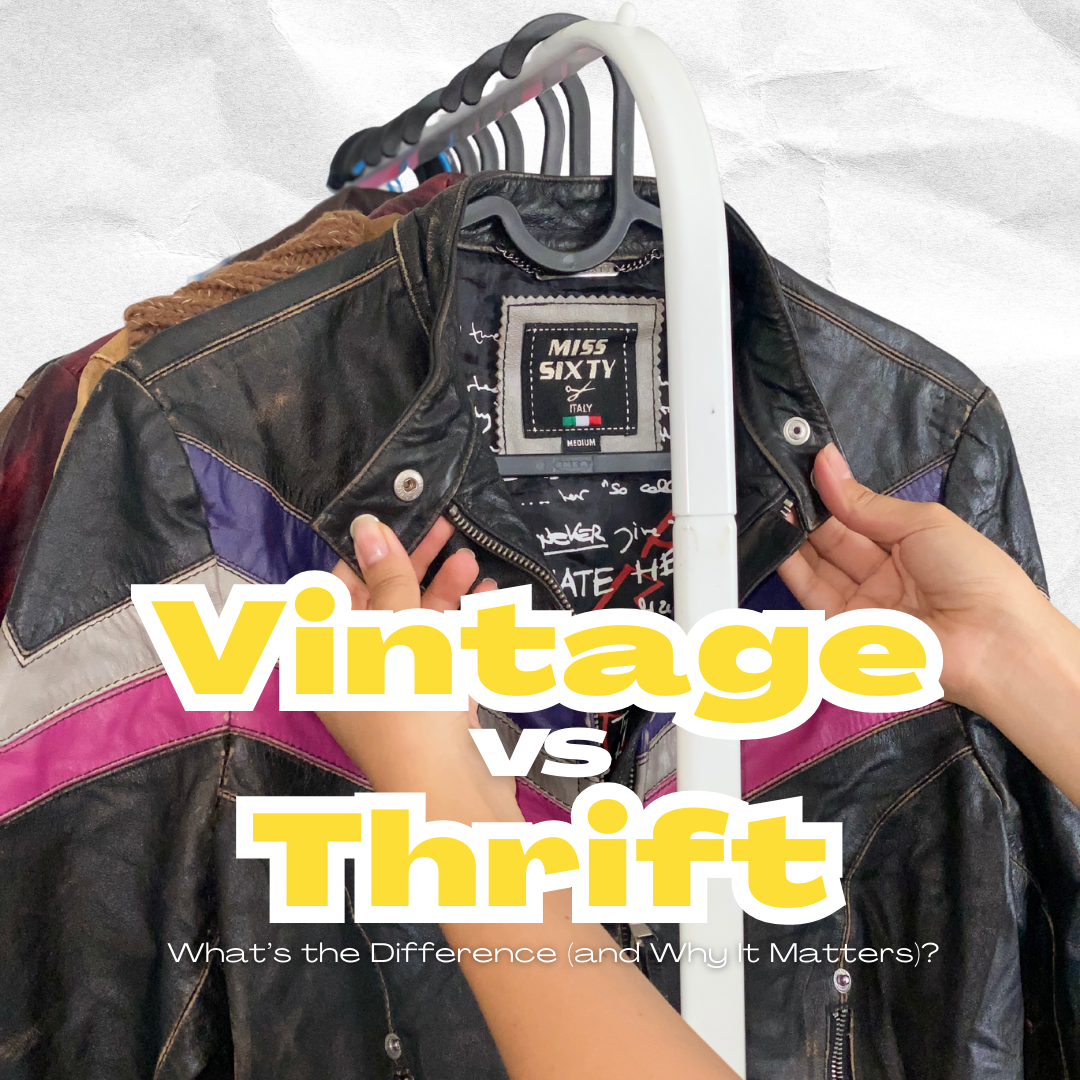

How to Tell If a Vintage Leather Jacket Is Real
If you’ve ever looked at a leather jacket online and thought,
“Is this actually real leather… or am I being fooled?”
you’re asking the right question.
With faux leather getting better at imitating the real thing, it’s becoming harder to tell the difference, especially when shopping vintage online. But there are clear signs once you know what to look for.
Let’s break it down in a simple, no-gatekeeping way.
First, what does “real leather” actually mean?
Real leather is made from animal hide, usually cowhide, lambskin, or goatskin. It ages, softens, and develops character over time.
Faux leather (also called vegan leather or PU leather) is synthetic. It’s made from plastic-based materials designed to look like leather, but it behaves very differently as it ages.
Here’s the big giveaway:
Real leather improves with time. Faux leather usually doesn’t.
Start with the feel. Your hands know more than you think.
If you can touch the jacket, gently squeeze or bend the leather.
Real leather:
- Feels soft, warm, and slightly uneven
- Creases naturally when pressed
- Feels flexible, not stiff
Faux leather:
- Often feels colder or plasticky
- Has a uniform, overly smooth texture
- Bends sharply instead of creasing naturally
Vintage leather especially should feel broken in, not rigid.
Look closely at the texture
Real leather is not perfect, and that’s a good thing.
Zoom in or look closely at photos. You’re looking for:
- Slight variations in grain
- Natural imperfections
- A texture that isn’t identical everywhere
Faux leather usually has:
- A very consistent, repeating pattern
- A “printed” look
- No natural variation
If every inch looks exactly the same, that’s a red flag.
Check the label, but don’t trust it blindly
Labels help, but they’re not everything.
Words that usually indicate real leather:
- Genuine leather
- Vera Pelle (Italian for “real leather”)
- Real leather
- 100% leather
- Cowhide, lambskin, goatskin
Words that usually mean faux leather:
- PU
- Vegan leather
- Faux leather
- Synthetic
- Man-made materials
That said, some older vintage jackets either have faded labels or no label at all. That’s why labels should support what you’re seeing and feeling, not replace it.
Smell is a big giveaway (yes, really)
Real leather has a distinct, natural smell. It’s warm, slightly earthy, and hard to fake.
Faux leather often smells:
- Like plastic
- Like chemicals
- Or has almost no smell at all
This isn’t always possible when shopping online, which is why buying from a trustworthy vintage store matters.
Look at how the jacket has aged
Vintage leather tells a story.
Real leather tends to:
- Soften over time
- Develop a natural patina
- Show gentle wear in high-movement areas like elbows and cuffs
Faux leather tends to:
- Peel or crack
- Flake at stress points
- Age unevenly and poorly
If a jacket from the 90s still looks supple and wearable, chances are it’s real leather.
Pay attention to the weight
Real leather jackets usually have some weight to them. Not heavy in a bad way, but substantial.
Faux leather jackets often feel lighter and thinner, especially older ones.
Weight alone isn’t proof, but combined with other signs, it adds clarity.
Stitching and construction matter
Vintage leather jackets were often made to last.
Look for:
- Strong, even stitching
- Reinforced seams
- Quality linings
Cheap faux leather jackets often cut corners on construction because the material itself isn’t built for longevity.
So why does this matter when shopping vintage?
Because real leather:
- Lasts longer
- Ages better
- Holds value
- Feels better to wear
When you’re buying vintage, you’re not just buying a jacket. You’re buying years of wear still ahead of it.
At Balagan Vintage, every leather jacket is hand-checked before listing. We inspect the material, condition, and construction so you know exactly what you’re getting. If a jacket is real leather, we say so clearly. If it’s not, we’re upfront about that too.
You can explore our current collection of vintage leather jackets here.
What about faux leather in vintage?
We’re honest about this too.
While our focus is mainly on real vintage leather, we do carry a small selection of faux leather or secondhand pieces when they:
- Add value to styling
- Complete a look
- Are in excellent condition
Transparency always comes first.
Quick checklist before you buy a vintage leather jacket
Ask yourself:
- Does the texture look natural or too perfect?
- Is the aging soft or cracked and flaky?
- Is the material clearly stated?
- Are condition notes detailed and honest?
If the listing avoids these details, that’s usually a sign to be cautious.
The simple takeaway
Real vintage leather jackets are easy to spot once you know what to look for.
They feel different.
They age differently.
And they last differently.
Learning how to tell real leather from faux helps you shop smarter, avoid disappointment, and invest in pieces that truly stand the test of time.
👉 If you’re ready to find a real vintage leather jacket, explore our hand-picked selection here. Vintage Leather